
3D Printing Information
Learn about the applications of 3D printing and the materials and colors we offer!
3D printing is an amazing technology that brings the power of creation into the hands of consumers. No longer do you need to wait for a company to come up with an idea. If you can think it, we can print it!

How 3D printing works
The 3D printing technology we offer is FDM (Fused Deposition Modeling). This technology uses spools of filament and melts them at temperatures ranging from 392°F to 545°F though a nozzle about 0.4mm to precisely lay down the plastic in layers which, over the span of several hours, ends you with a completed model. This process allows for complex models that even injection molding sometimes cant reproduce.
Material Guide
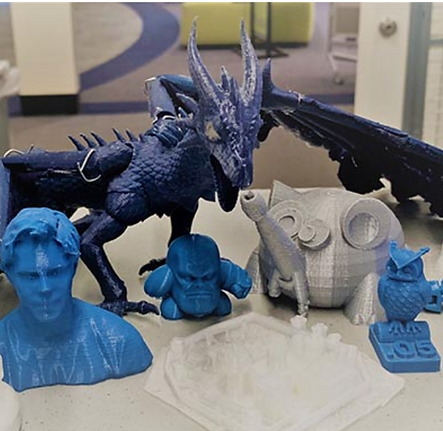
PLA (Polylactic acid)
PLA is the king of the 3D printing sphere!
Known for its print quality, PLA is an all round great material to choose for most projects!
Pros:
-
Print Quality
-
Cheapest and most wildly used option
Cons:
-
Low heat resistance (softens at 140F)
-
Not suitable for outdoor projects (is damaged overtime by UV light)
Examples:
-
Home Decorations
-
Toys
-
Prototype parts

ABS (Acrylonitrile Butadiene Styrene)
When it comes to parts used in most consumer products, ABS is king!
ABS is used in 3D printing for objects that need a higher temperature resistance and strength then PLA or PETG.
Pros:
-
High impact and wear resistance
-
Good thermal resistance
-
Suitable for outdoor use (Resistant to UV)
Cons:
-
Can have artifacts that are created due to the material being difficult to print.
-
When bent or stressed, abs creates a white mark on the plastic that is only removable with heat.
Examples:
-
Car accessories
-
Gears and replacement parts
-
Outdoor Signs
-
Lawn Decorations

PETG (polyethylene terephthalate glycol)
PETG is a great material when it comes to needing strong parts at a cost effective price. it also has better temperature resistance versus PLA.
Pros:
-
Great middle ground for strength and heat resistance versus price,
-
Somewhat chemically resistant
Cons:
-
Not good for small, detail oriented models.
Examples:
-
Mechanically stressed parts
-
Covers for electronics
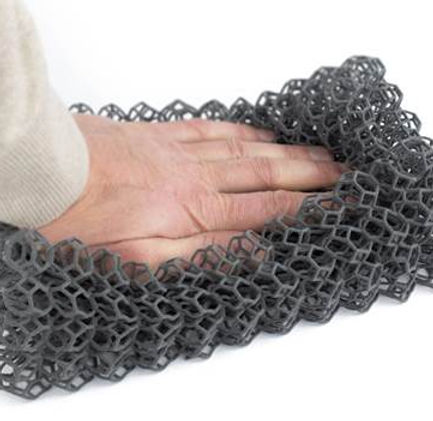
TPU Thermoplastic Polyurethane
When you need a stress toy, phone case or anything that needs to bend or twist, TPU has you covered. This unique material can be bent but retain its original shape once released.
Pros:
-
Can bend unlike other materials
-
Very Durable
Cons:
-
Not good for small, detailed models
-
not usable for gears or anything that needs to be rigid.
Examples:
-
Toys for kids
-
Custom phone cases
-
Stress toys

PC Polycarbonate
PC is a highly technical material that is used in applications where heat resistance and strength is a must!
Pros:
-
Stronger than any other material that we print
-
Best heat resistance than any other material we print
Cons:
-
Expensive
Examples:
-
Car parts
-
Gears for machines
-
RC car parts

PA polyamide
PA, also known as nylon is a great material when chemical resistance is a must. it also can withstand high temperatures and is quite strong.
Pros:
-
Great Temperature resistance
-
Resistant to a wide range of chemicals
-
suitable insulation material
Cons:
-
Not good for highly detailed models.
-
Highly Hygroscopic
-
Expensive
Examples:
-
Lab equipment replacement casing
-
Mechanical parts used in situations where chemicals are present